The First Signs of Autumn in a Familiar Lane
The first signs of autumn in a familiar lane are easiest to notice at an unhurried pace; use plants, light and fallen leaves to compare visits.
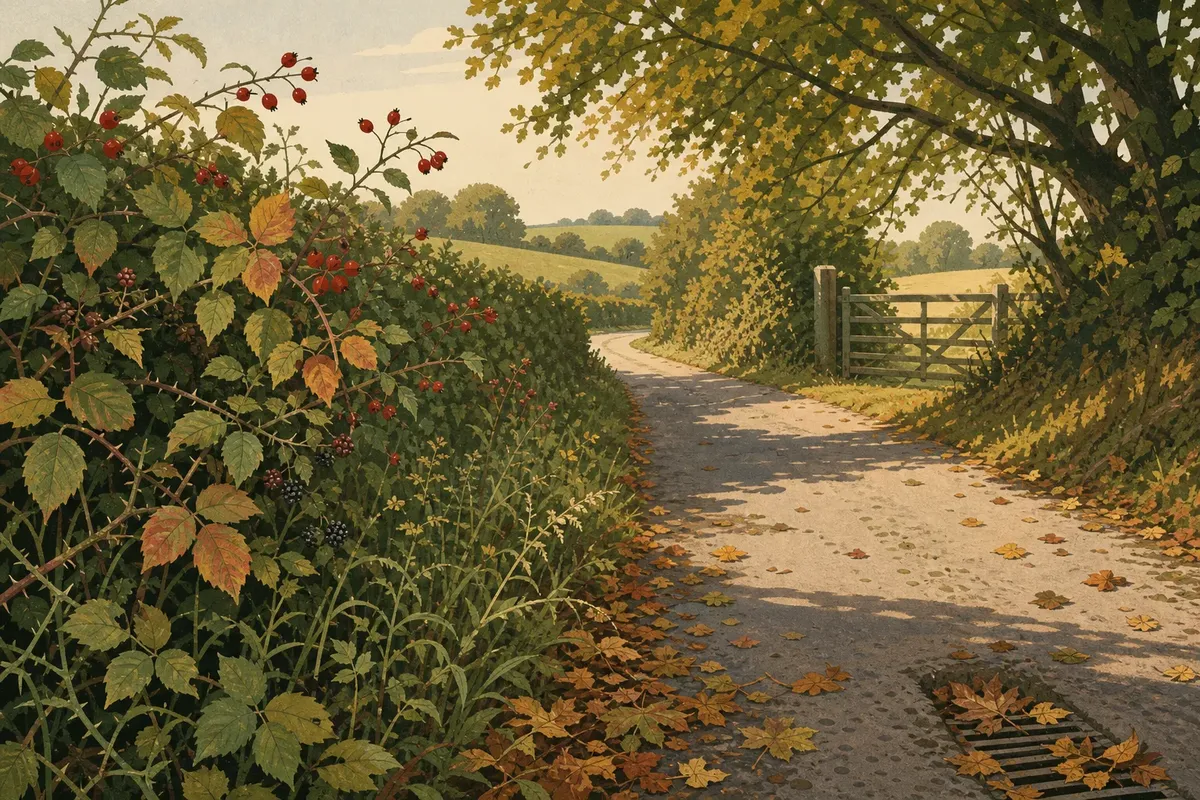
The first signs of autumn in a familiar lane may be a single hawthorn berry turning red, a cooler strip of shade beneath the hedge, or leaves beginning to gather at a drain. A lane you know well makes these small changes easier to notice: you have already seen its bends, verges and trees in another season. Let the walk be shaped by what has altered, not by how many signs you can collect.
What kind of seasonal walk suits you?
The right pace depends on what you want to notice and how well you know the route. You do not need a special destination; a short stretch you have walked before can offer a useful comparison.
- If you have little time: choose one bend or gate and look closely at the same patch of verge you remember. A small area is easier to compare than a hurried walk along the whole lane.
- If you want to notice gradual change: revisit a route from an earlier walk, preferably in similar weather and at a similar time of day. This makes differences in light and plant appearance easier to separate from changes caused by conditions.
- If your earlier visit is only a vague memory: walk without trying to reconstruct exact details. Notice what stands out now, then let the next visit provide a clearer point of comparison.
- If the lane is busy or wet: stay on the verge or public path, give vehicles room and avoid stepping into muddy field entrances to reach leaves. A slower, safer route is more useful than a close look that puts you at risk.
Which plants are changing along the verge?
Look first at familiar plants rather than trying to identify every flower or berry. Hawthorn, bramble and elder are common hedgerow plants in many parts of Britain, though what grows beside a particular lane depends on its soil, management and location.
Notice whether bramble leaves are still fresh green or showing red and bronze patches, whether berries have appeared, and whether nettle stems have become less leafy. These are observations, not a calendar: one hedge may be exposed to sun while another stays sheltered, so neighbouring plants can look different at the same time.
Compare the shape of the verge as well as its colour. A patch of grass cut since your last walk may reveal low plants that had been hidden; a thick growth of seed heads may now bend towards the path. The change may come from seasonal growth, cutting, grazing or weather, so describe what you can see without deciding too quickly why it happened.
How has the light altered the lane?
Light can change a familiar route before the leaves have changed much. The sun sits lower in the sky as autumn approaches, and hedges that once cast little shade may stretch longer shadows across a track. A gap between trees can briefly catch warm light while the next stretch feels cool and dim.
Pause at a place you remember from summer and look at where the light falls now. Is the bank still bright, or does shade reach it earlier in the day? If the weather differs from your earlier visit, treat the comparison gently: cloud, rain and time of day can alter the scene as much as the season does.
What do fallen leaves tell you?
A few leaves on the ground can mark the beginning of a change, but they do not mean every tree is turning at once. Look for the species you recognise: a broad sycamore leaf, the small rounded leaf of hazel, or the pointed shape of birch. If you cannot identify it, its position and condition still matter.
Notice whether leaves are crisp, damp, curled or pressed into the soil. A dry spell can leave them loose and papery; rain may flatten them against the path or gather them at a kerb. Their colour can be vivid in one patch and faded in another, depending on shade, exposure and how long they have lain there.
It is not worth collecting handfuls of leaves or trying to name every one. A glance at a few fallen beside a tree is enough to connect the ground with the canopy above, while leaving the lane as you found it.
How can you compare visits without turning the walk into a task?
Choose a few fixed places—a gatepost, a bend beneath an ash tree, or the point where the lane crosses a small stream. At each, give yourself a moment to notice one plant, one quality of light and one change on the ground. If one of those details has not changed, that is still a useful part of the comparison.
Say you walked this lane in late summer and remember the hawthorn hedge as mostly green. On your next visit, berries have coloured and a few leaves lie under it, but the bank remains bright in the afternoon. The observable difference is modest, yet it gives you a clear thread to follow on a later walk without turning the route into a search for proof of autumn.
If you want a reminder for next time, write a short note afterwards: where you paused and what you noticed. Keep it to a few plain words rather than a full inventory. The note should help your memory, not become another thing to manage while walking.
What should you notice on your next autumn walk?
When is the best time to look for the first signs of autumn?
There is no single date that suits every lane. Look for a gradual shift in the plants, light and leaf litter on a route you already know, and treat the timing as local to that place.
Should you revisit at the same time of day?
Similar timing makes light easier to compare, particularly on a lane with overhanging trees. If your schedule does not allow it, simply note whether the visit is in brighter, cloudier or wetter conditions.
What if the lane looks almost unchanged?
Stay with one small detail, such as a hedge’s berries or the feel of leaves beneath the canopy. Seasonal change can be uneven, and a familiar place need not offer a dramatic signal on every visit.
Can a walk still be useful if you cannot name the plants?
Yes. You can compare colour, leaf shape, where growth is thickest and how the light falls without knowing a plant’s name. If you later want to identify a species, use a reliable field guide or local nature resource rather than relying on a guess.
Let the lane set the pace
The first signs of autumn in a familiar lane are often quiet: a hedge carrying berries, shadows reaching further across the path, or a handful of leaves gathered at the edge. Choose the stretch that suits your time and footing, then compare what is there with what you remember. On a later visit, the most useful new observation may be that a detail you noticed before has changed—or that it has stayed much the same.
Along the same path
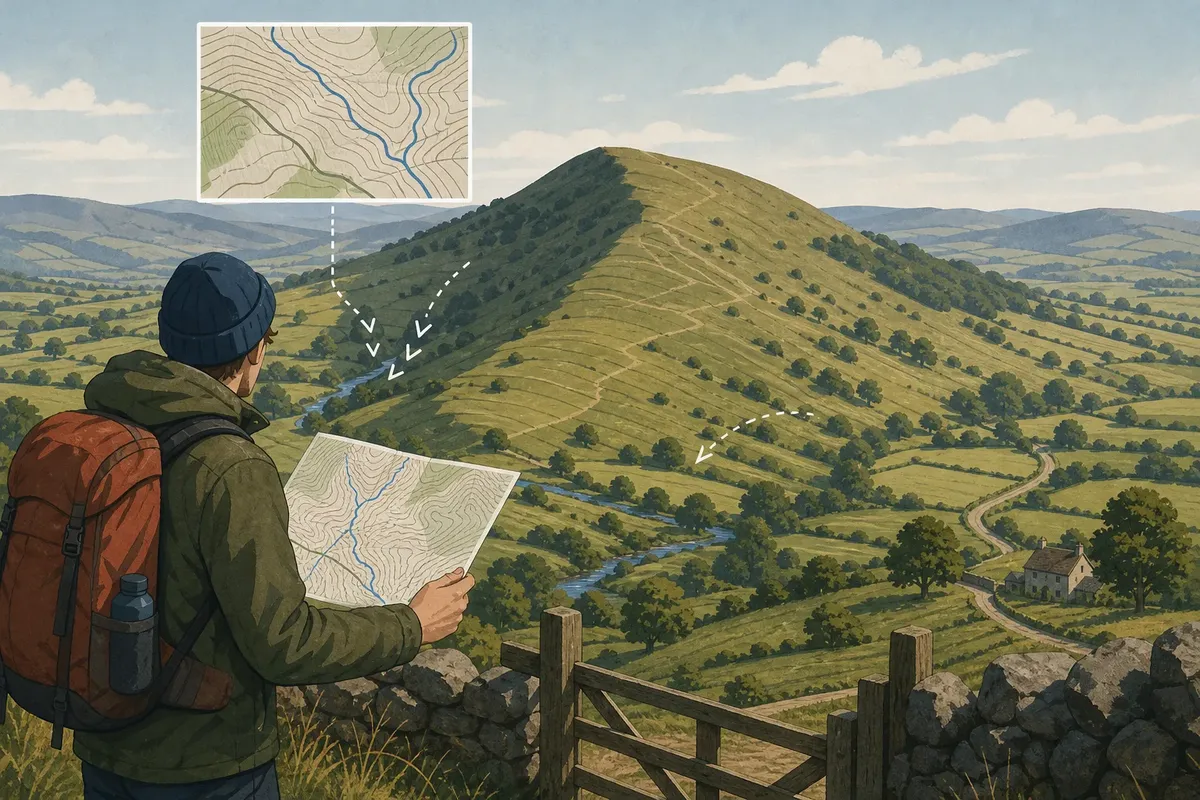
Why a Hillside Looks Different from Above
Why a hillside looks different from above: understand how overhead contours, slope direction and light reveal…
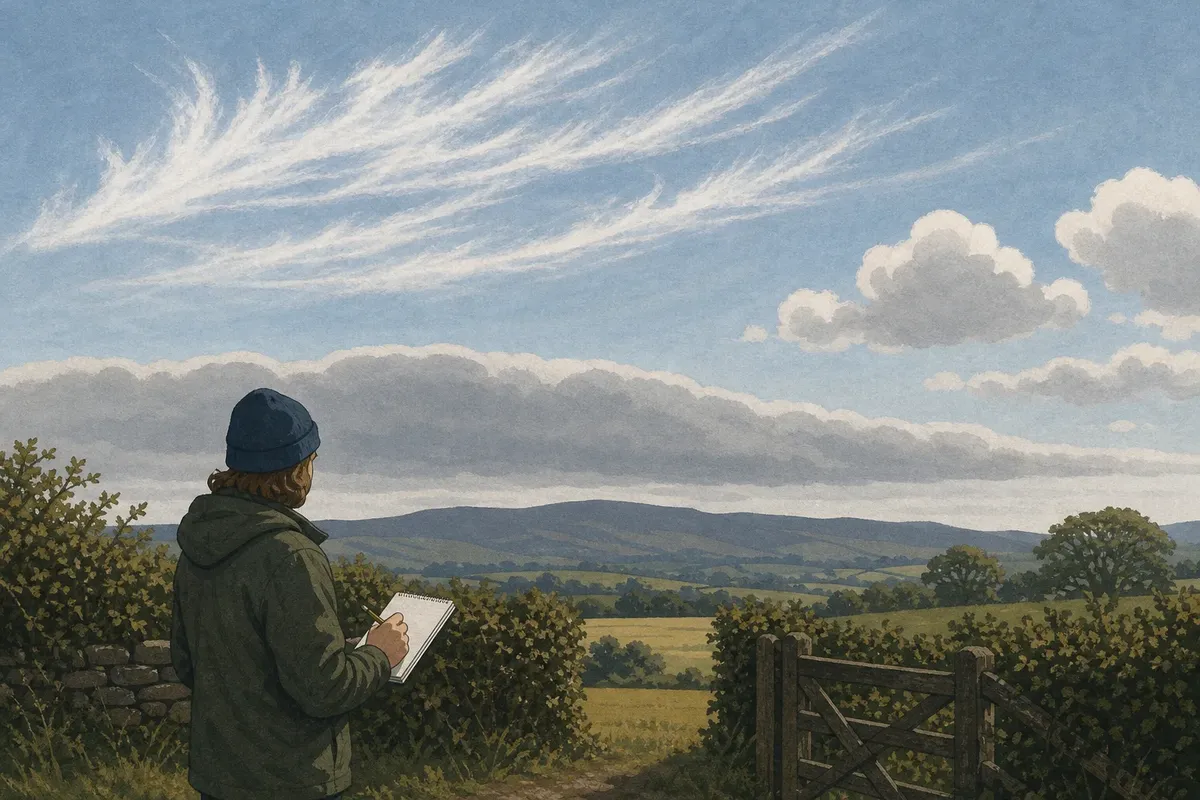
High Wisps or Low Grey: Reading Cloud Shapes
Reading cloud shapes helps you describe the sky clearly, distinguish high wisps from grey layers and…