A Pocket Record for a Country Walk
A pocket record for a country walk helps you recall where you went, what conditions you met and which small details caught your attention.
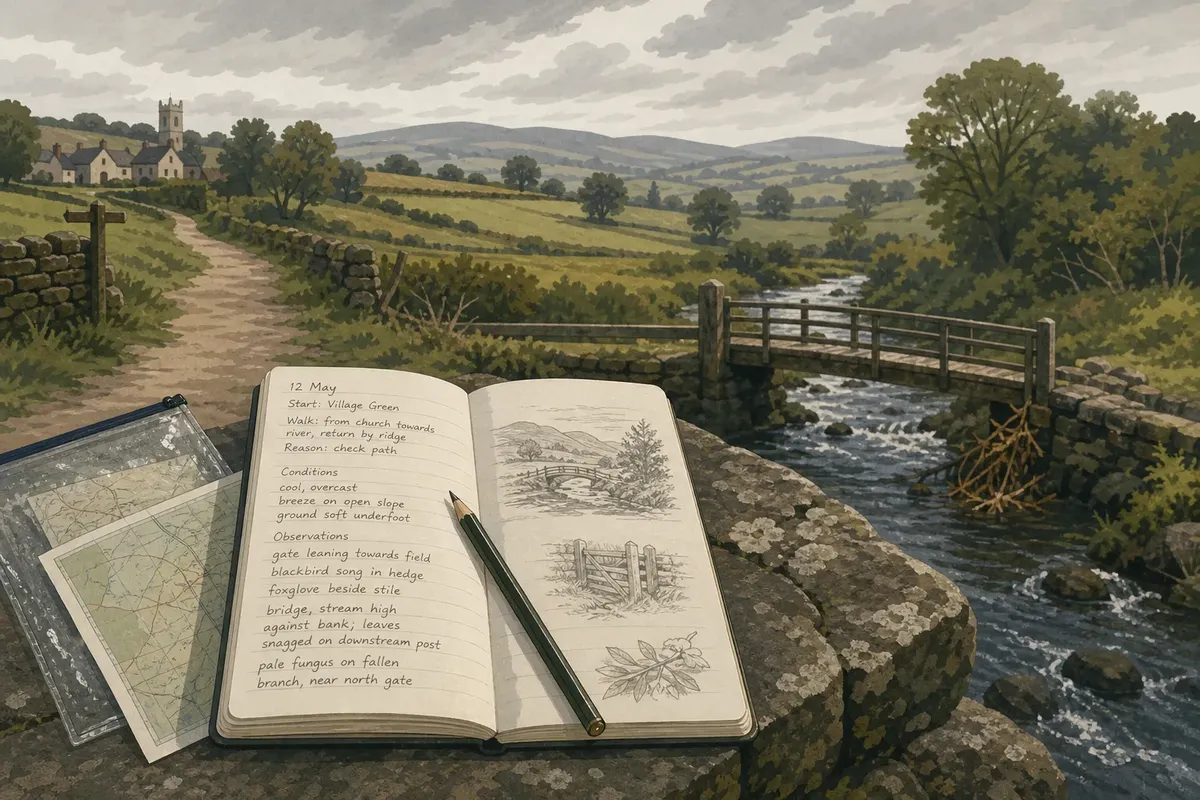
A pocket record for a country walk need not be a miniature diary. A few notes made at the right moments can bring back the route, the feel of the weather and the detail you might otherwise forget, without turning a walk into a writing exercise.
Use a small notebook and pencil, or a notes app if you prefer to keep your hands free. The useful habit is the same: record a simple location, the conditions you noticed and a handful of particulars. Leave space for uncertainty; a field note is a prompt for memory, not a claim to have understood everything in front of you.
What should you carry?
Choose a notebook that fits a coat pocket and opens without much fuss. A soft pencil is dependable in damp air and does not need to dry like ink. A phone can be convenient for a map reference or a quick note, but it is not necessary if a few written words will do.
Keep the kit deliberately spare:
- A pocket notebook with paper that takes pencil.
- A pencil, preferably one that can be used without sharpening on the walk.
- A folded map or a route name, if you are in unfamiliar country.
- A simple way to keep paper dry, such as a reusable waterproof pouch.
There is little value in carrying several pens, a ruler or a stack of identification guides for this purpose. The record is meant to accompany attention, not compete with it.
How do you begin the record?
At the start, write the date and a location you can recognise later: the name of a lane, a village, a common or a map grid reference if you already use one. Add the direction or broad shape of the walk, such as “from the church towards the river, returning by the ridge”. This is usually more useful than trying to draw every turn.
Note the time of day only if it helps distinguish this outing from another. You might also mark the reason for the walk in a few words: checking a familiar path, visiting a viewpoint or following a stream. Keep the opening line plain enough to scan quickly when you look back.
What conditions are worth noting?
Write down conditions as you experienced them, not as a formal forecast. “Cool shade, breeze on the open slope, ground soft underfoot” can tell you more about the walk than a string of weather terms. If the sky changed noticeably, make a short note of the change rather than trying to describe every cloud.
Conditions include more than the air. Damp grass, a dry track, water running in a ditch, or shelter from wind behind a hedgerow can all shape what you notice. Pick the details that affected the walk or altered the scene; a long inventory of ordinary conditions is difficult to use later.
Which details deserve a line?
Choose a few observations that are specific enough to call the place back to mind. A gate leaning towards the field, the sound of water beneath a culvert, or a patch of open ground among bracken is more memorable than “nice countryside”. You can note what you saw, heard or smelled, and say where it was along the route.
Keep observation separate from interpretation. “Several small birds lifted from the hedge” records what happened; naming them as a particular species belongs in the note only if you are confident. If you are unsure, write “small brown birds, identification uncertain” and let the uncertainty remain visible.
Say you walk from a village green to a footbridge on a mild, overcast afternoon. At the bridge you notice muddy water moving quickly and fresh leaves caught against a post; you write “bridge, stream high against the bank; leaves snagged on downstream post”. On a later walk, that line may help you recall both the place and the stream’s condition without pretending it explains why the water rose.
How can you keep a pocket record useful?
Should you write while walking?
Pause somewhere safe and out of the way, then jot a phrase rather than a paragraph. If stopping would interrupt the walk or leave you in an awkward spot, hold the detail in mind and write it down at the next natural pause.
How much detail is enough?
Use enough words to distinguish the observation from a general impression: “foxglove beside the stile” is clearer than “flowers”. If a note requires a full explanation, it may be better to draw a small mark or leave it for later.
What if you cannot identify something?
Describe its visible features and location without guessing: “pale fungus on fallen branch, near the north gate”. A photograph can help with later identification, but keep the note useful even if you never consult the image.
When should you review the notes?
At home, read through the page while the walk is still fresh and add a word or two where your shorthand is unclear. Avoid turning recollection into certainty: if you cannot remember a detail, mark it as uncertain rather than filling the gap with a plausible story.
How do you make the notes easy to revisit?
Leave a small amount of space between outings and give each one a clear date and starting place. Use the same simple order each time—location, conditions, observations—so that your eye can find what it needs. A loose sketch of a bend, gate or stream crossing can help when names are absent, but it need not be a map.
If you later compare walks, compare like with like. A note about a sheltered lane can sit beside another from the same lane, while a visit in different conditions may call for a separate observation rather than a tidy conclusion. The record becomes more useful when it preserves differences instead of smoothing them away.
A pocket record for a country walk works best when it stays modest: a place you can find again, the conditions that shaped the outing and a few details that held your attention. Leave the page unfinished if the walk has more to offer; the next visit can add its own evidence without requiring the first note to say more than you knew.
Along the same path
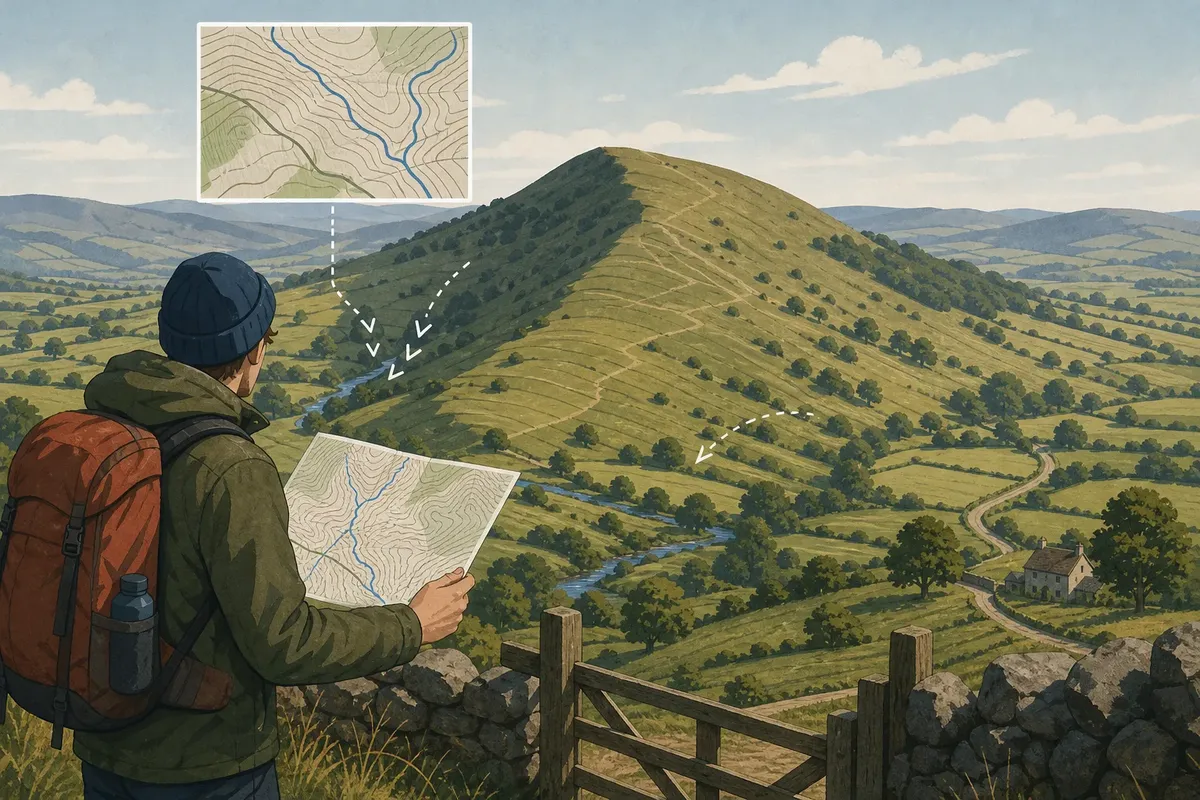
Why a Hillside Looks Different from Above
Why a hillside looks different from above: understand how overhead contours, slope direction and light reveal…
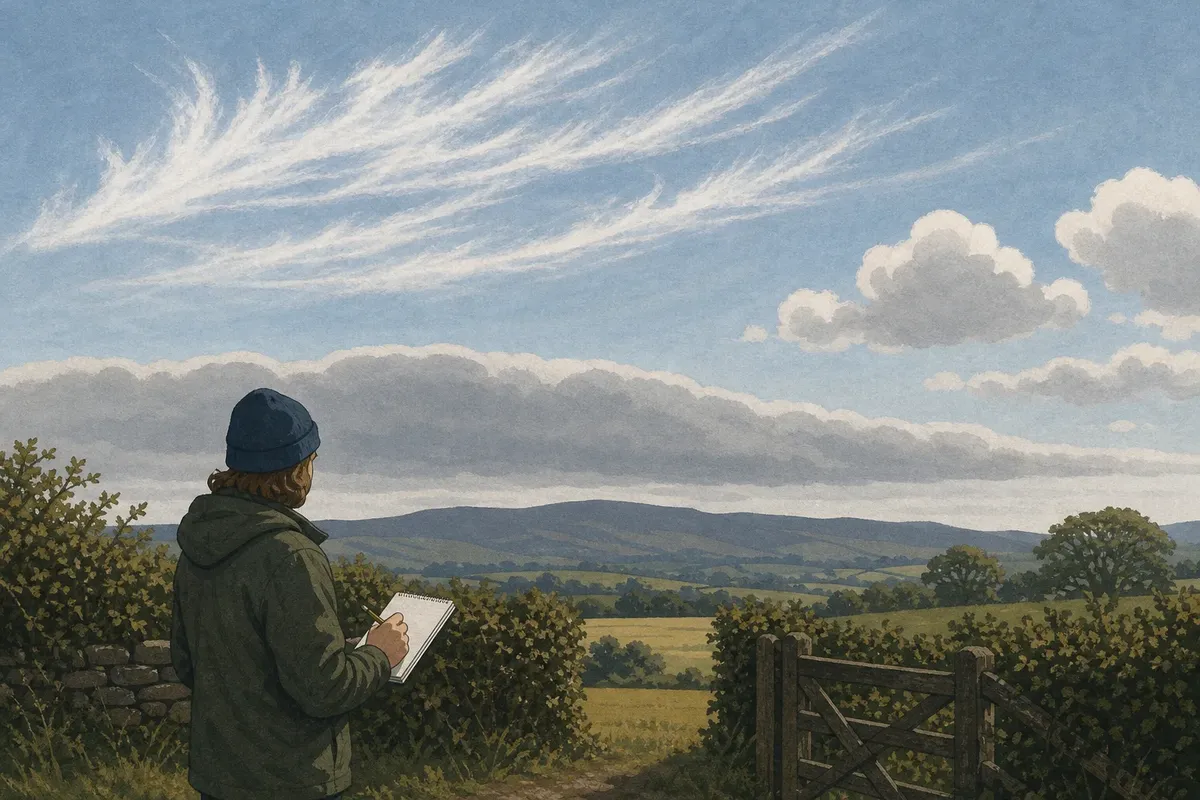
High Wisps or Low Grey: Reading Cloud Shapes
Reading cloud shapes helps you describe the sky clearly, distinguish high wisps from grey layers and…